Ragdoll Physics 2 Doctor Mode & Medical Triage
Read vitals, fix limbs, defibrillate teammates, and turn injuries into better weapon tests.
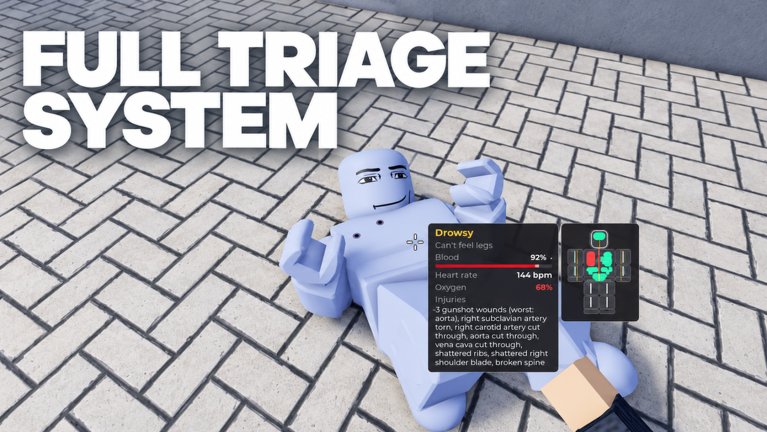
Doctor Mode is what separates Ragdoll Physics 2 from a pure knockabout ragdoll toy. Woof Industries built a medical loop — pulse, oxygen, injuries, bandage, splint, defibrillator — so downs feel like problems to solve, not only respawn timers. You can treat other players, stage field hospitals in Creative Mode, and use diagnostics to learn which guns actually ruin which body systems. This guide is the practical triage manual.
New players should skim Getting Started and Controls so they can reach a body and open medical tools without fumbling menus mid-panic.
Why the medical system exists
The sandbox borrows vibes from Garry’s Mod, Arma 3, and People Playground. Soft-body chaos is funnier when a shotgun blast has consequences you can measure. Wars and AI police scenarios throw grenades and flank; without triage, every firefight collapses into instant resets. Doctor Mode lets groups keep a narrative going: extract the wounded, stabilize oxygen, splint a leg, and send them back with a rocket launcher.
It is also a lab instrument. If you are comparing free weapons from the November rework, reading vitals after each shot teaches more than watching a dummy flop once.
Vitals at a glance
Two readouts matter immediately:
- Pulse — is the heart still doing useful work? A weak or absent pulse pushes you toward defibrillator priority after you clear obvious blockers.
- Oxygen — airway and breathing status. Low oxygen means your bandage work will not stick if the patient cannot exchange air. Fix oxygen-related issues before polishing cosmetic wounds.
Treat vitals as a triage sort, not a lore dump. Glance, decide, act. If both pulse and oxygen look catastrophic, defib and airway thinking beat decorating every scrape with a bandage.
Wound types and what they imply
Exact labels can vary by update, but gameplay clusters into familiar buckets:
- Bleeding / soft tissue — bandage territory. Fast to apply, essential after shrapnel, axes, and stray pellets.
- Fractures / limb trauma — splint territory. Legs and arms take ugly hits from vehicles, crushers, wrecking balls, and fall damage off skyscrapers. A splinted player can rejoin a fight; an unsplinted one keeps collapsing into comedy ragdolls at the wrong time.
- Cardiac / severe shock — defibrillator territory. Use when revive alone leaves them clinically useless, or when pulse will not return after a dramatic explosion test.
- Compound chaos — mixed injuries from miniguns, flamethrowers, and multi-grenade stacks. Work ABC style: life-threatening pulse/oxygen first, then structural limbs, then leftover bleeds.
Map choice changes injury patterns. Crash test lab impacts hammer bones. Demolition yard crushers create spectacular full-body trauma. Open Maps when you plan a medical training day so your “hospital” is not sitting under a wrecking ball.
Bandage → splint → defibrillator workflow
Use a repeatable order so teammates trust you:
- Scene safety — drag or call for cover. Reviving inside an active rocket duel wastes the kit. Grab/carry if your controls support it (Controls).
- Quick revive if they are simply downed and responsive enough to stand.
- Inspect vitals in Doctor Mode. Note pulse and oxygen before you spam every item.
- Bandage bleeding soft tissue so they do not slide backward while you work.
- Splint broken limbs that would dump them the moment they sprint to a vehicle.
- Defibrillator when pulse is the blocker. Clear the animation, confirm a better pulse, then recheck oxygen.
- Re-inspect once. Medics who never recheck create false confidence — players stand up, take three steps, and fold.
Carry medical tools in hotbar slots next to your primary weapon. With 140+ guns available, it is easy to bury the defib under novelty launchers. Discipline saves runs.
Treating other players
Ragdoll Physics 2 is online multiplayer with servers up to 21 players. That means:
- Call targets — “splinting blue hoodie by the ramp” — so two medics do not stack animations on one body while another bleeds out.
- Ask combat players to peel AI police away from the casualty. Bots that take cover and throw grenades love punishing huddles.
- In Creative or Workshop scenes, assign a dedicated medic role when filming stunts. Missions added in the mid-November update also benefit from someone who understands triage instead of pure DPS.
- Respect consent in sandbox roleplay. Not every server wants hardcore medical sim; some just want flamethrower montages. Match the room.
Community-facing pages like Players help you find groups that enjoy medic mains. For client-side script chatter people research off-platform, see Scripts — keep medical play fair and ToS-safe.
Using diagnostics to design better weapon tests
Doctor Mode doubles as instrumentation for the Weapons lab:
- Fire the same sniper into a torso vs a limb, then compare pulse crash versus fracture flags.
- Test shotguns at different ranges; pellet spread changes which systems fail first.
- Compare grenades vs rockets on oxygen and multi-limb trauma.
- Use the physics gun or tool gun to stage controlled falls, then measure outcomes like a People Playground experiment.
- Log results mentally or in a private note: “minigun sustained → oxygen tanked before fractures” helps you build fair war loadouts and funnier cinematic scripts.
Pair medical findings with the Tier List so rankings reflect incapacitation quality, not only explosion size. Free weapons from the November Sea Update / rework deserve the same triage tests as prestige toys — free does not mean weak.
Field clinic setups
Creative Mode and the Spawn Menu let you build a clinic: walls for cover, a clear floor for animations, vehicles staged as ambulances, and dummies for practice before human patients. Weather toggles from recent updates can add rain or mood lighting for screenshots without changing the medical logic. Share finished clinics through Workshop flows described in Sandbox & Creative Mode.
On busy public servers, keep clinics off the main war lane. A demolition yard looks cool until the crusher becomes your triage bay.
Common medic mistakes
- Bandaging forever while pulse is flat — defib first when the readout says so.
- Ignoring oxygen — standing patients who immediately black out waste everyone’s time.
- Splinting after sending them into a sprint war — fix legs before the next skyscraper staircase.
- Standing in the open with AI police active — dead medics treat nobody.
- Forgetting to re-equip a gun after defib — you are still in a war.
Related reading
- Controls — revive keys, mobile prompts, controller face buttons.
- Weapons — what creates the wounds you are fixing.
- Maps — safest training spaces vs high-trauma maps.
- Updates — patches that touch police, missions, or tools.
- Codes — no active codes; do not expect medical unlocks via redeem.
- Guides Hub — full tutorial index.
Master vitals, keep the kit hotbarred, and treat Doctor Mode as both ambulance and laboratory. That mindset unlocks longer wars, better science, and cleaner Workshop storytelling.
Frequently Asked Questions
Quick answers to the most common questions.
What vitals should I check first in Doctor Mode?
Pulse and oxygen. Stabilize life-threatening vital failures before polishing every minor wound with bandages.
When do I use the defibrillator instead of a bandage?
Use the defibrillator when pulse is critically bad or revive leaves the player clinically ineffective. Bandages handle bleeding soft tissue; they do not replace cardiac recovery.
Can I treat other players, not just myself?
Yes. Doctor Mode is built for multiplayer triage. Approach the patient, inspect, then apply bandage, splint, or defibrillator as needed.
How does Doctor Mode help weapon testing?
After each shot or explosion, read which vitals and limbs failed. That turns ragdoll chaos into comparable data across snipers, shotguns, explosives, and melee.
Where should I practice triage?
Use quieter maps or a Creative clinic away from crushers and active wars. Practice on dummies first, then on willing teammates.